
Low Tack Stickers: Practical Uses Without the Mess
Posted by : Mercury Labels Ltd on Monday, April 13, 2026 in Low Tack labels.
Low tack stickers
solve a simple but persistent problem: how to display, label, or promote
something without leaving residue or damaging the surface. They are designed
for temporary use, but the difference between a good and poor product is
significant. This guide focuses on what matters so that you can choose and use
them effectively.
What makes low tack stickers different
Low tack adhesives
are formulated to bond lightly to a surface. They stay in place when applied
correctly but remove cleanly without tearing or leaving glue behind. This makes
them suitable for environments where surfaces need to remain intact, such as
painted walls, glass, packaging, or printed materials.
Unlike permanent
adhesives, they rely on balance rather than strength. Too weak and they fall
off. Too strong and they defeat their purpose. The best low tack stickers
maintain that balance across different surfaces and conditions.
Where they work best
Low tack stickers
are not universal. They perform best on smooth, clean surfaces.
Ideal surfaces:
- Glass and mirrors
- Laminated or coated paper
- Plastics and acrylic
- Metal surfaces
Less suitable surfaces:
- Rough or textured walls
- Unsealed wood
- Fabric
If the surface is
uneven, the adhesive cannot maintain consistent contact, which reduces
performance.
Common applications that make sense
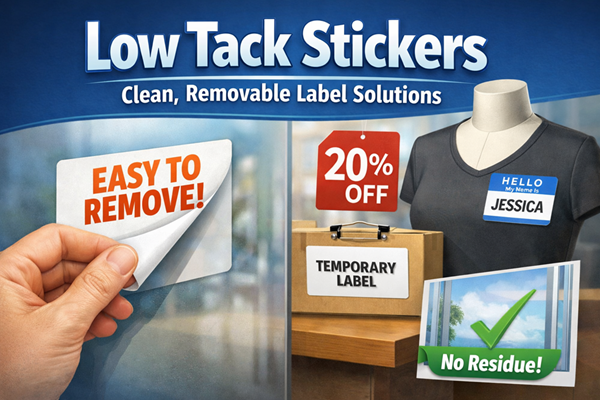
Low tack removable
labels are used across industries because they remove cleanly and quickly.
Retail and merchandising
- Temporary price labels
- Promotional stickers on packaging
- Window displays
Events and exhibitions
- Name badges
- Directional signage
- Limited-time branding
Offices and logistics
- Filing and categorisation
- Temporary stock identification
- Re-labelling during audits
Easy peel removable
labels are especially useful in fast-paced environments where speed matters.
Staff can apply and remove them without tools or damage.
What to look for when choosing
Not all products
marketed as low tack are equal. Focus on these factors:
Adhesive
consistency
The sticker should peel away cleanly after hours or days, not just minutes.
Material quality
Thin or poor-quality materials curl at the edges or tear during removal.
Print clarity
If used for branding or labelling, the print must remain sharp and legible.
Environmental
resistance
Consider temperature, moisture, and light exposure. Some adhesives fail under
heat or humidity.
The best low tack
stickers are those that perform reliably in your specific use case, not just
under ideal conditions.
Application tips that actually matter
Applying low tack
removable labels properly makes a noticeable difference:
- Clean the surface before applying
- Avoid touching the adhesive side
- Apply with even pressure from the centre
outward - Do not stretch the material during placement
These steps prevent
air bubbles and improve adhesion without increasing residue risk.
Removal without damage
Removal should be
straightforward. Start at one corner and peel slowly at a shallow angle. If
resistance increases, pause rather than pulling harder. This reduces the chance
of tearing or leaving adhesive behind.
In colder
conditions, adhesive can stiffen. Allowing the sticker to reach room
temperature before removal improves results.
When low tack is the wrong choice
Low tack adhesives
are not designed for long-term or heavy-duty use. Avoid them if:
- The label must remain in place for months
- The surface is exposed to frequent handling
- The environment includes high heat or
moisture
In these cases, a
stronger adhesive is more appropriate.
Final thoughts
Low tack stickers are a practical solution for
temporary applications where cleanliness and flexibility matter. When chosen
carefully and used correctly, they provide a reliable way to label, promote, or
organise without creating extra work later.