
Removable, Repositionable or Permanent Labels: What the Adhesive Types Actually Mean
Posted by : Mercury Labels Ltd on Wednesday, November 11, 2026 in Choosing Your Labels.
Adhesive
descriptions on labels sound precise, but the terms are used loosely. Two
suppliers can both sell a "removable" label and mean different things
by it. Order the wrong grade and the label either falls off halfway through the
job or refuses to come off at the end of it.
This guide explains
what permanent, removable, super peel and repositionable adhesives usually
mean, where the differences matter, and which one suits which job. If you
already know you need removable labels, the sections on super peel and
repositionable adhesives will help you narrow the choice.
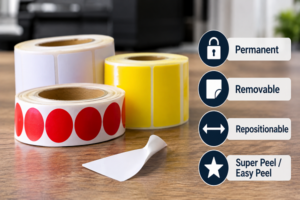
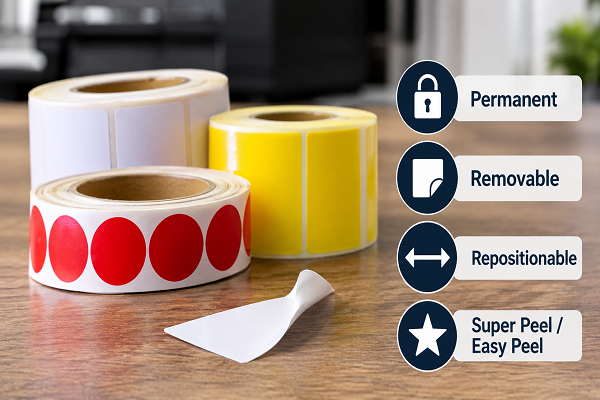
Permanent, removable and repositionable: the basics
Permanent
adhesive is built to bond
and stay. The bond strengthens over the first day or so after application, and
by the end of that period the label is part of the surface for practical
purposes. Peeling it off later usually tears the label, marks the surface or
leaves glue behind.
Removable
adhesive holds the label
firmly for its working life, then releases cleanly when peeled. Suppliers often
use "low tack" as shorthand for this grade. The two are not strictly
the same thing, because tack describes how strongly a label grabs on first
contact, while removability describes what happens when you take it off. In
practice, a good removable adhesive combines a light initial grab with a bond
that does not build to the point of damage.
Repositionable
adhesive is designed so
that a label can be lifted and put down again, more than once, and still stick.
This is a different requirement from removability. A removable label is meant
to come off once, at the end of its life. A repositionable label is meant to be
moved while it is still in use.
Where super peel and easy peel fit
Super peel and easy
peel are not separate adhesive categories. They are names suppliers give to the
lightest end of the removable range, where leaving any residue is unacceptable.
Glass is the standard example, since glue marks on a window or glazed unit are
visible and difficult to clean.
Mercury Labels uses
these names for its glass range, which is made to stay in place for any length
of time and still lift without leaving glue or marks behind. The same adhesive
thinking applies to glass easy peel labels used by glazing manufacturers and window
suppliers.
Why the terms cause confusion
There is no
industry-wide standard for these names. "Low tack",
"removable", "peelable" and "easy peel" overlap,
and one supplier's removable grade may be another's repositionable one. Two
points are worth keeping in mind when comparing products:
- Removable
does not mean repositionable.
Once a removable label has been lifted, it may pick up dust or fibres, or the
paper may crease, and it will not necessarily grip a second time. - Time
changes the result. A label
that peels cleanly after an hour may behave differently after a month. Ask how
long the grade is intended to stay on, not only whether it is removable.
Matching the adhesive to the job
| Job | Adhesive grade | Reason |
| Price marking that customers remove at home | Removable |
Holds in the shop, peels off a finished product without a mark. Greeting cards are a good example, when you get home you are able to tell when a removable adhesive label has been used as the label easily peels off, compared to permanent adhesive where label removal can be difficult and damage the card. |
| Entries on patient records, medicine sheets or sample containers | Removable |
The label can be discarded later while the original document stays intact |
| Glass, windows and glazed units | Super peel or easy peel | Can stay for long periods and still come away without residue |
| Layouts, displays or planning where position may change | Repositionable | The label can be moved without being replaced |
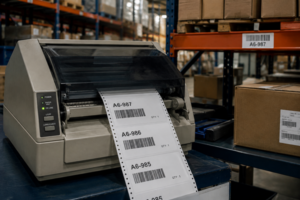
| Stock identification, shipping and barcode labels | Permanent | The label must survive handling and storage |
| Anything that must show if it has been interfered with | Permanent | A label that peels off cleanly gives no evidence of tampering |
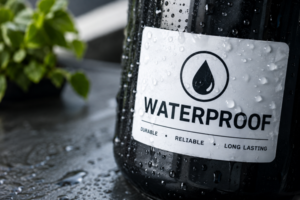
For long-term
outdoor or damp conditions, the adhesive is only half of the decision. The face
material matters just as much, and waterproof labels are made with that in mind. The waterproof
labels are available in these adhesive’s on A4 sheets or labels on rolls.
Four questions to settle before you order
- How
long does the label need to stay on? Hours, weeks and months call for different grades. The longer the label
stays, the more the choice matters. - Will
it need to be moved? If so,
ask specifically for a repositionable grade rather than assuming removable will
do. - Is
any residue acceptable? If
not, ask for super peel or easy peel, and test it on the actual surface. - Are
you printing the labels yourself? If you are using an inkjet or laser printer, check that the adhesive
grade is available on the sheet material you need, including clear labels for transparent stickers. If you are using labels on rolls let the
sales team know if your printer prints with a ribbon which is a thermal
transfer material if not then the material is direct thermal.
Whatever the
answer, ask for a free of charge sample and test it under the conditions it
will face. Our guide to low
tack stickers covers
suitable surfaces and application in more detail.
Getting the right grade from Mercury Labels
Mercury Labels can
supply its whole catalogue with a low tack adhesive option, so choosing a
removable grade does not mean giving up the size, material or finish you need.
If a job calls for something more specific, such as a particular dwell time or
a surface that has caused problems before, call the sales team on 0845 026 4232
or email sales@mercurylabels.com. Let us know the application and we will
give you the best option and take away any confusing terminology. With over 25
years’ experience we are a company you can trust.