
How Healthcare Providers Use Labels for Patient Safety and Tracking
Posted by : Mercury Labels Ltd on Tuesday, May 26, 2026 in Choosing Your Labels.
In healthcare
environments, accuracy matters. A misplaced sample, unreadable wristband or
incorrect medication label can lead to delays, compliance issues and serious
patient risk. Labels play a critical role in helping hospitals, pharmacies,
laboratories and care providers maintain safe and efficient operations.
From barcode
tracking systems to tamper-evident medication labels, healthcare organisations
rely on durable, high-quality labels every day to support patient safety,
improve traceability and reduce human error.
Why labels matter in healthcare
Healthcare settings
handle large volumes of sensitive information, medication and patient records.
Staff must identify patients quickly, track specimens accurately and ensure
medication reaches the correct person at the right time.
Labels support
these processes by providing clear identification and scannable data throughout
the patient journey.
Common healthcare labelling applications
include:
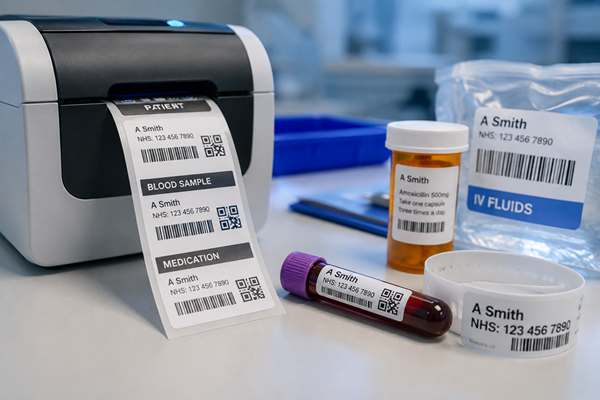
- Patient identification wristbands
- Specimen and pathology labels
- Pharmacy and prescription labels
- Asset tracking labels
- Medical equipment labels
- Barcode inventory labels
- Tamper-evident security labels
When labels are
designed correctly, healthcare providers can improve operational efficiency
while reducing avoidable mistakes.
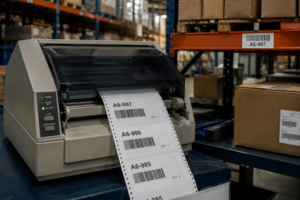
Barcode labels improve accuracy
Barcode technology
has become standard across modern healthcare facilities. By scanning labels
rather than relying on manual data entry, staff can access accurate information
instantly.
Barcode labels are widely used for:
- Patient identification
- Medication administration
- Blood bag tracking
- Laboratory sample management
- Stock control
- Medical records
Scanning systems
help verify that the correct medication, dosage or treatment is assigned to the
correct patient. This reduces the risk of medication errors and improves
traceability across departments.
For laboratories, barcode labels
simplify specimen tracking from collection through to testing and reporting.
This helps avoid lost samples, duplicate records and identification issues.
Patient identification labels reduce risk
Patient wristbands
are one of the most important safety tools in healthcare. These labels often
include:
- Patient name
- Date of birth
- Unique barcode
- NHS number
- Allergy alerts
Before treatment or
medication is administered, healthcare staff can scan or check the wristband to
confirm patient identity.
Clear print quality
and durable materials are essential. Wristbands and identification labels must
remain readable despite exposure to moisture, cleaning products and constant
handling.
Pharmacy labels support safe medication management
Pharmacies rely on
accurate labels to ensure medication is dispensed safely and in line with
regulations.
Prescription labels typically include:
- Dosage instructions
- Patient information
- Expiry dates
- Batch numbers
- Barcode data
- Warning notices
Poor print quality
or adhesive failure can create serious risks in clinical environments. Labels
used in pharmacies must remain legible and securely attached throughout storage
and use.
Tamper-evident
labels are also commonly used to protect medication packaging and improve
patient confidence.
Laboratory labels must withstand challenging conditions
Healthcare
laboratories operate in demanding environments where labels may be exposed to:
- Refrigeration
- Freezing temperatures
- Chemicals
- Moisture
- Sterilisation processes
Standard labels
often fail under these conditions. Specialised healthcare labels are designed
with strong adhesives and durable materials to remain intact and scannable.
Reliable laboratory
labels improve sample tracking and help maintain compliance with healthcare
regulations and quality standards.
Asset tracking improves efficiency
Hospitals and
clinics manage thousands of valuable assets, including:
- Medical devices
- Monitoring equipment
- Wheelchairs
- IT systems
- Surgical tools
Barcode asset
labels allow providers to track equipment locations, maintenance schedules and
usage history more effectively.
This reduces
equipment loss, improves availability and supports preventative maintenance
programmes.
Compliance and traceability in healthcare
Healthcare providers
must meet strict regulatory requirements around patient records, medication
handling and traceability.
Accurate labelling
supports compliance by creating clear audit trails and improving record
accuracy. Barcode systems also help organisations meet inventory management and
safety standards more efficiently.
Labels used in healthcare settings should
provide:
- Clear readability
- Strong adhesive performance
- Resistance to wear and moisture
- Reliable barcode scanning
- Consistent print quality
Choosing the
correct label materials and adhesives is essential for long-term performance.
Choosing the right healthcare labels
Healthcare
environments require labels that are reliable, durable and suitable for
specific applications. Factors to consider include:
- Surface type
- Environmental conditions
- Required lifespan
- Barcode compatibility
- Chemical resistance
- Adhesive strength
Working with an
experienced online label provider
can help healthcare organisations identify the right products for their
operational needs.
Final thoughts
Labels are a
fundamental part of modern healthcare systems. From patient identification and
medication safety to laboratory tracking and asset management, labels help
healthcare providers maintain accuracy, compliance and efficiency across every
department.
As barcode
technology continues to evolve, high-quality healthcare labels will remain
essential for improving patient safety and supporting reliable healthcare
operations.