
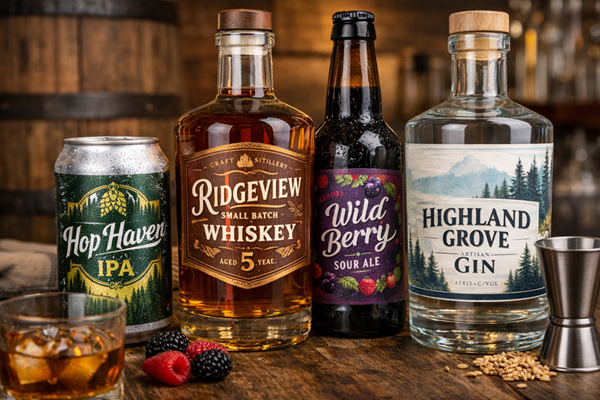
How Craft Breweries and Distilleries Use Custom Labels to Build Brand Identity
Posted by : Mercury Labels Ltd on Monday, June 15, 2026 in Choosing Your Labels.
There is a moment
every craft producer knows well. The liquid is right, months of recipe
development, sourcing, and patience have paid off. But the bottle sitting on
the shelf does not look the part. A generic label, the wrong finish, stock
paper that cannot handle a cold fridge or a damp bar back. And just like that,
a product that deserves attention gets passed over.
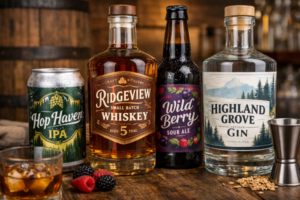
Custom labelling is not a cosmetic afterthought for craft
breweries and distilleries. It is one of the most commercially significant
decisions a brand will make, and getting it wrong is far more costly than most
producers anticipate.
The label is the first sale
Before anyone
tastes the product, they read the label. In a crowded craft market, where a
single tap room or bottle shop shelf might hold sixty competing SKUs, the label
carries the full weight of the brand's first impression.
Consumers in the
craft drinks sector are not passive. They read. They photograph. They research
the producer before they buy again. The label has to communicate provenance,
character, and quality at a glance, then hold up to closer inspection.
For independent
breweries and distilleries, this is an advantage, not a burden. Unlike large
commercial producers locked into corporate brand standards, craft brands have
the freedom to create labels that are genuinely distinctive, ones that reflect
the personality of the people making the product and the story behind it.
That freedom only
works if the label is executed properly.
The specific challenges craft producers face
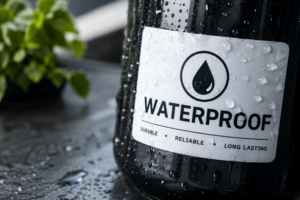
Condensation
This is the issue
that catches more craft producers off guard than any other. Chilled cans and
bottles sweat. Labels that are not rated for moisture will bubble, peel at the
edges, or lose adhesion entirely, often within minutes of coming out of a cold
storage unit.
The problem is not
just cosmetic. A peeling label on a craft beer or spirits bottle signals poor
quality to the consumer, regardless of what is inside. It undermines the brand
at precisely the moment the product should be performing.
The solution is a
combination of the right substrate and the right adhesive. Polypropylene films
handle condensation well and retain print quality in cold environments.
Permanent waterproof adhesives prevent edge lift even through sustained
temperature changes. If the product is going into a chiller, ice bucket, or cold
chain distribution, these specifications are not optional.
Bottle and container shapes
Standard label
stock is designed for standard surfaces. Craft producers rarely use standard
surfaces.
Heavily embossed
gin bottles, tapered whisky decanters, squat amber growlers, irregularly shaped
craft ale bottles, all of these present real application challenges. A label
that lies flat on a test surface may crease, pucker, or leave gaps when applied
to a curved or compound surface.
Wrap-around labels
on cylindrical cans require a different approach again, particularly at the
seam joint. Getting a clean, aligned finish on a shaped bottle or can is a
print and materials problem as much as a design one, and it requires a label
printer who understands the difference.
The right supplier
will work from the actual container, not a generic template, to ensure the
label dimensions, face stock flexibility, and adhesive are matched to the shape
being used.
Premium finishes
The craft drinks
market has driven consumer expectations for packaging quality to a level that
would have seemed unusual a decade ago. Gold and silver foiling, embossing,
soft-touch matte laminates, textured papers, spot UV varnishes, these finishes
are now common across independent distilleries and premium craft breweries, and
they serve a functional purpose beyond aesthetics.
A tactile label
communicates quality before a single drop is poured. It also photographs well,
which matters enormously in a market where product discovery increasingly
happens through social media.
What producers need
to understand is that premium finishes interact with label materials in
specific ways. Spot UV on a matte laminate behaves differently to spot UV on a
gloss substrate. Foiling requires a suitable base stock. Soft-touch laminates
affect the flexibility of the face material, which in turn affects how the
label behaves on curved surfaces.
These are not
details to resolve at the end of the design process. They need to be built into
the brief from the beginning.
What a strong craft drinks label actually communicates
Beyond the
technical requirements, the best labels in this sector do something harder to
quantify: they tell a story that the consumer wants to be part of.
This might be the
heritage of the distillery, the region, the water source, the still. It might
be the character of a head brewer and the beers they have spent years
perfecting. It might be something irreverent and bold that signals the brand
does not take itself too seriously. Whatever the narrative, the label is where
it lives in physical form.
Typographic
choices, illustration style, colour palette, paper weight, and finish all
contribute to that story. A single-malt Scotch whisky printed on cheap gloss
stock with a clip-art crest undermines the entire proposition. A 5% session IPA
with a wild, illustrated label and a heavy matte finish positions the brand
exactly where it wants to be.
The label is not
separate from the brand. It is one of the most visible expressions of it.
Short runs and seasonal releases
One of the genuine
operational advantages craft producers have over large commercial brands is the
ability to move quickly. A collaboration brew, a seasonal release, a
limited-edition spirit tied to a local event, these are opportunities that a
responsive label print process can support.
Short-run digital
printing has made it commercially viable to produce small quantities of
high-quality custom labels without the minimum order volumes that once made
limited releases prohibitively expensive. Craft breweries producing runs of a
few hundred bottles can now access the same finish quality as much larger
operations.
Variable data
printing adds another layer of flexibility, enabling batch numbering,
personalised labels for gift products, or sequential edition numbering without
a separate print run for each variant.
Working with a label printer who understands the sector
Not every label
printer is set up to handle the demands of craft drinks packaging. The
combination of cold-chain requirements, shaped containers, premium finish
expectations, and short-run flexibility requires both the right equipment and
genuine sector knowledge.
Mercury Labels has
over 30 years of experience producing custom labels across a wide range of
industries, with a full in-house design team available to every customer. For
craft breweries and distilleries working through label specifications for the
first time, or revisiting an existing label that is not performing as expected,
that experience translates directly into fewer costly mistakes and a faster
route to the right result.
If the liquid in
the bottle is worth the investment that has gone into making it, the label
deserves the same care.Looking to develop custom labels for your
brewery or distillery? Get in touch with the Mercury
Labels team to
discuss your requirements.